"I was injured in an automobile accident and I had an severe neck and back pain that made it unbearable to breath or sit comfortably. I went online and sent an email over to Dr. Hameed one evening and the next morning bright and early I received an email and a call from him saying they could get me in right away.
I was so happy that I was able to actually breath again without pain. I have also suffered from headaches and migraine headaches in the past and I an now feeling better at this too. Everyone in the office is always so friendly too! It is just a joy to be able be healthy healing and also see friendly smiles too. I'm really happy I found Arwa Chiropractic of Aurora! I couldn't ask for anything better."
- Heather K.
Eat Right. Sleep. Exercise
Chiropractic | Massage Therapy | Gua Sha | Cupping | Acupuncture
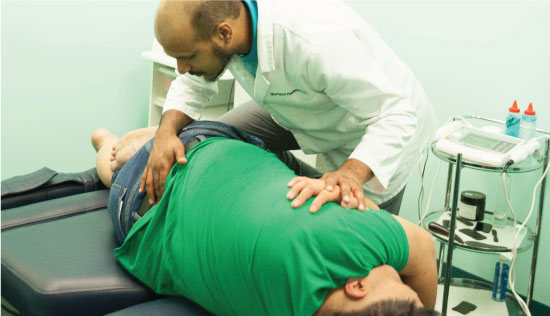
A Chiropractic Manipulation is the controlled movement of a joint, by a licensed Chiropractic Physician, that allows a restricted joint to move with greater ease. This specialized technique is used by Dr. Hameed at Arwa Chiropractic of Aurora to mobilize the restricted joint and reduce pain by relieving irritation on the nerve. Blood flow to the surrounding area is improved allowing a greater rate of healing. The cavitation or popping sound you might hear during a manipulation is the exchange of gas from the fluid joint, similar to opening a bottle of soda. (top)
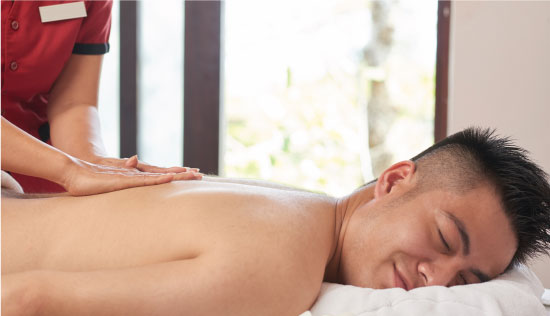
A massage is the treatment of superficial parts of the body by rubbing, stroking, kneading, or slapping. Massages are usually performed to relieve muscle stiffness, spasms, or cramps and to relieve anxiety and tension.
There are many different types of massages. The types of massages are generalized to their origin (eastern and western). Some of the most common Eastern types are: Shiatsu, Accupressure, and Polarity. Eastern types of massages involve an understanding of the body's energy. Some of the common Western types are: Swedish,Neuromuscular Therapy, Trager, Myofascial Release, and Connective Tissue Therapy. Western types are based in an anatomical understanding of our body.
Each person responds differently to massage and there isn't just one style which is best for all.
How Does Massage Work?
Basic Massage techinques such as stroking, kneading, and rubbing stimulate physical and emotional healing. They stimulate physical and emotional healing by:
1. Physical therapy on the part of the body that is being massaged
2. Stimulation of the lymphatic system. (The lymphatic system carries waste products out of your body and defends your body against infection) (top)
Deep Tissue Massage
Deep Tissue Massage is a massage technique that focuses on the deeper layers of muscle tissue. It aims to release the chronic patterns of tension in the body through slow strokes and deep finger pressure on the contracted areas, either following or going across the fiber's of the muscles, tendons and fascia.
Deep tissue massage is used to release chronic muscle tension through slower strokes and more direct deep pressure or friction applied across the grain of the muscles not with the grain. Deep tissue massage helps to break up and eliminate scar tissue. Deep tissue massage usually focuses on more specific areas and may cause some soreness during or right after the massage. However, if the massage is done correctly you should feel better than ever within a day or two.
Why get a Deep Tissue Massage?
It feels good and it is beneficial to your health. When muscles are stressed, they block oxygen and nutrients, leading to inflammation that builds up toxins in the muscle tissue. A deep-tissue massage helps loosen muscle tissues, release toxins from muscles and get blood and oxygen circulating properly. Because many toxins are released, it's important to drink plenty of water after a deep-tissue session to help eliminate these toxins from the body. (top)
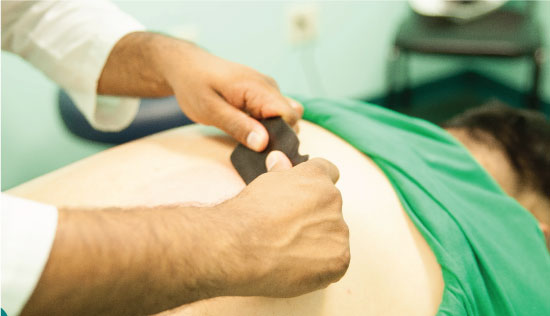
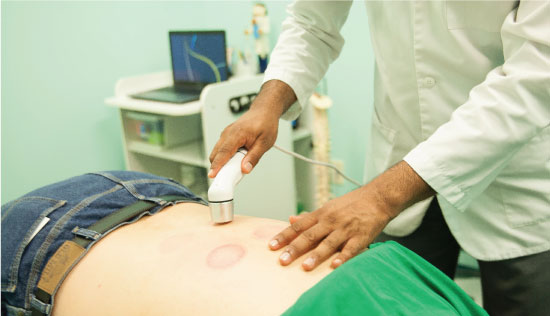
Gua Sha is a healing technique used in Asia by practitioners of Traditional Medicine, in both the clinical setting and in homes, but little known in the West. It involves palpation and cutaneous stimulation where the skin is pressured, in strokes, by a round-edged instrument; that results in the appearance of small red petechiae called 'sha', that will fade in 2 to 3 days.
Raising Sha removes blood stagnation considered pathogenic, promoting normal circulation and metabolic processes.The patient experiences immediate relief from pain, stiffness, fever, chill, cough, nausea, and so on. Gua Sha is valuable in the prevention and treatment of acute infectious illness, upper respiratory and digestive problems, and many other acute or chronic disorders. (top)
How does cupping work? What does it treat?
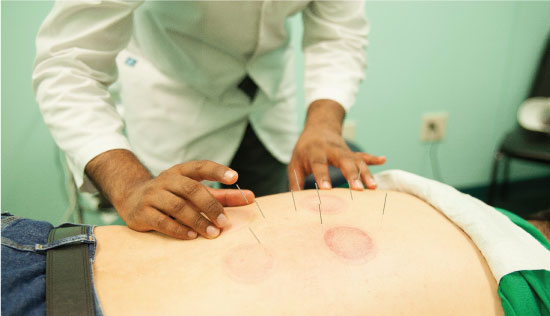
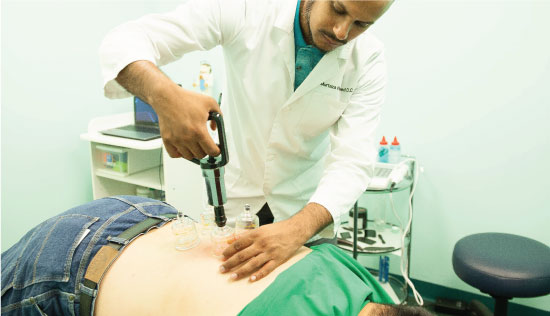
In a typical cupping session, glass cups are warmed using a cotton ball or other flammable substance, which is soaked in alcohol, let, then placed inside the cup. Burning a substance inside the cup removes all the oxygen, which creates a vacuum.
As the substance burns, the cup is turned upside-down so that the practitioner can place the cup over a specific area. The vacuum created by the lack of oxygen anchors the cup to the skin and pulls it upward on the inside of the glass as the air inside the jar cools. Drawing up the skin is believed to open up the skin's pores, which helps to stimulate the flow of blood, balances and realigns the flow of qi, breaks up obstructions, and creates an avenue for toxins to be drawn out of the body.
Depending on the condition being treated, the cups will be left in place from 5 to 10 minutes. Several cups may be placed on a patient's body at the same time. Some practitioners will also apply small amounts of medicated oils or herbal oils to the skin just before the cupping procedure, which lets them move the cups up and down particular acupoints or meridians after they have been applied.
In China, cupping is used primarily to treat respiratory conditions such as bronchitis, asthma, and congestion; arthritis; gastrointestinal disorders; and certain types of pain. Some practitioners also use cupping to treat depression and reduce swelling. Fleshy sites on the body, such as the back and stomach (and, to a lesser extent, the arms and legs), are the preferred sites for treatment. (top)
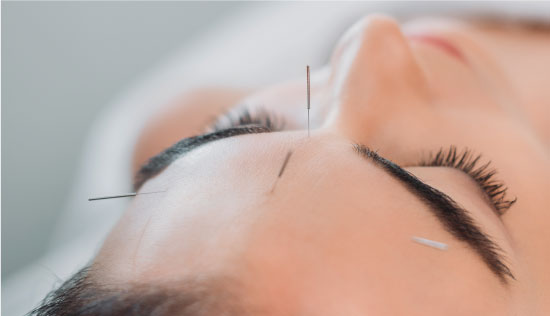
Acupuncture is the procedure of inserting and manipulating needles into various points on the body to relieve pain or for therapeutic purposes. Acupuncture needles are used in specific acupuncture points which give access to the meridians in the body through which the Qi flows so that adjustments can be made to balance the Yin and Yang thus restoring harmony and health.
Acupuncture is an extremely effective natural method of healing that is very safe and does not have any side effects. There is a powerful energy flowing in the body and circulating in the major organs. The Chinese have used acupuncture for 5,000 years. (top)